What Is Included in End of Lease Cleaning?
Most renters only ask what is included in end of lease cleaning when the final inspection is already booked and the clock is against them. That is usually when the small details start to matter – the grease above the cooktop, the marks on the skirting boards, the dust sitting on top of built-in wardrobes, and the bathroom grout that looked fine until the light hit it properly.
End of lease cleaning is a detailed top-to-bottom clean designed to return a property to a presentable, hygienic condition for the next tenant or owner. It is not the same as a regular weekly clean. Property managers and landlords tend to look closely at high-touch areas, visible build-up, stains, odours and anything that suggests the home has not been properly maintained. The aim is simple: help the property meet the expected handover standard and reduce the risk of bond deductions.
What is included in end of lease cleaning for most homes?
In most Adelaide rentals, end of lease cleaning covers the main internal areas of the property, including the kitchen, bathrooms, laundry, bedrooms, living areas and general surfaces throughout. The exact scope can vary between companies, but a professional service usually focuses on built-up grime, sanitisation, dust removal and presentation.
A standard service normally includes wiping walls where marks can be safely removed, cleaning skirting boards, light switches, door frames, internal doors, window sills and accessible ledges. Floors are usually vacuumed and mopped, with extra attention to corners and edges where dust collects. Cobwebs are removed, wardrobes and cupboards are cleaned inside and out, and accessible fittings are dusted.
That said, condition matters. A well-kept unit that has been cleaned regularly will need less corrective work than a family home with pets, cooking residue and months of traffic through the carpets. The checklist may be similar, but the time, effort and equipment needed can be very different.
Kitchen cleaning is usually the most detailed part
If there is one room that can decide how the whole property feels at inspection, it is the kitchen. This is where end of lease cleaning becomes more technical, because food residue, grease and splash marks often settle into places that are easy to miss during day-to-day cleaning.
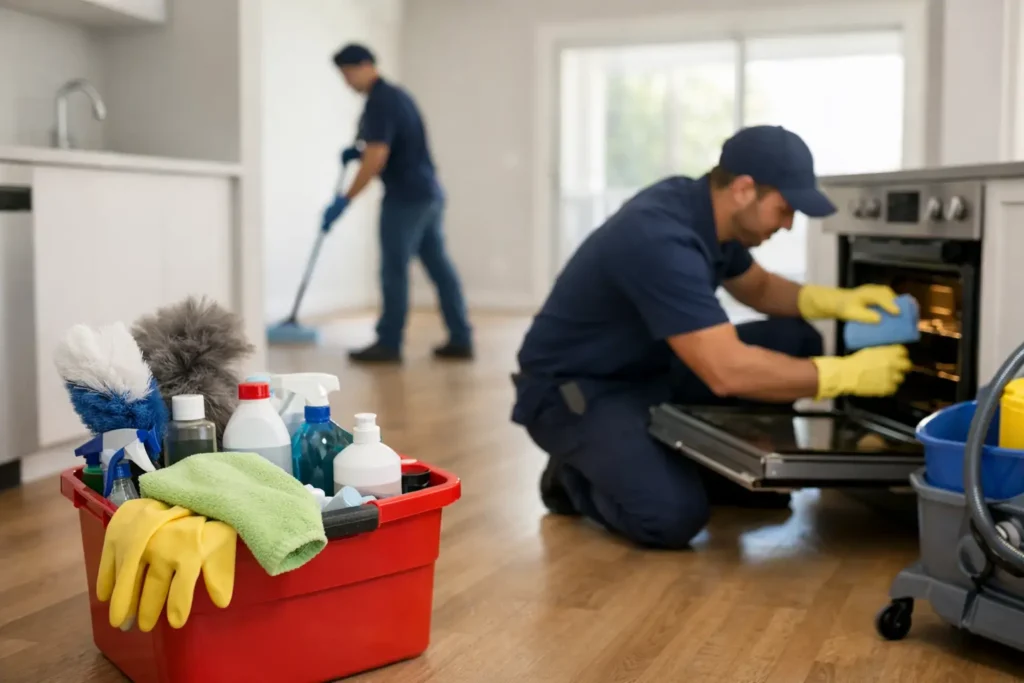
A thorough kitchen clean generally includes benchtops, splashbacks, the sink and tapware, cupboard fronts, shelves, drawers, kickboards and external surfaces of appliances. The stovetop is degreased, the rangehood is cleaned, and the oven is usually cleaned inside and out if that is part of the agreed service. Many tenants are surprised by how much attention inspectors pay to the oven, especially the glass, racks and tray supports.
Small details count here. The area behind and beside freestanding appliances, food crumbs in drawer runners, marks around handles and grease on tiled splashbacks can all stand out. If the property has a dishwasher, it is often wiped externally and cleaned internally where needed, but this should always be confirmed in the quote.
Bathrooms and laundries need more than a quick wipe-down
Bathrooms are another high-scrutiny area because they show soap scum, mould spotting, water marks and mineral build-up very clearly. In a proper end of lease clean, showers, screens, tiles, taps, basins, mirrors, vanities, bathtubs and toilets are all cleaned and sanitised.
Grout lines, shower tracks and corners around the base of the toilet often need extra work. Exhaust fans, towel rails and cupboard interiors should not be overlooked either. In the laundry, the tub, tapware, bench area, cupboard fronts and floors are usually included, along with attention to dust and lint build-up.
There is a trade-off here worth knowing. Light mould spotting can often be treated as part of general bathroom cleaning, but heavy mould growth may require specialised mould cleaning. If there is staining, damaged sealant or long-term moisture problems, cleaning alone may improve appearance without fully restoring the surface.
Living areas and bedrooms are about detail and presentation
In bedrooms and living spaces, end of lease cleaning usually focuses on dust, marks and floor presentation. Built-in robes are cleaned inside and out, mirrors are polished, window sills are wiped, and skirting boards are cleaned. Light fittings that can be safely reached may be dusted, and any removable cobwebs are cleared from corners and ceilings.
Walls are often spot-cleaned rather than fully washed. That matters because not every mark can be removed without affecting the paint finish. Professional cleaners will usually work carefully on scuffs and fingerprints, but some stains, abrasion marks and paint damage are beyond cleaning.
This is one of the most common points of confusion between tenants and agents. Cleaning can restore hygiene and presentation, but it does not repair wear and tear. If there are dents, chipped paint, damaged blinds or torn flyscreens, those issues usually sit outside the cleaning scope.
Floors and carpets can be a separate requirement
Floors are a major part of the handover standard, and what is included in end of lease cleaning often depends on the flooring type. Hard floors are typically vacuumed and mopped, with closer work around edges, under accessible furniture and in corners. Timber, vinyl and tiles each need the right products and methods to avoid damage.
Carpets are a separate discussion because many property managers expect a professional carpet clean, particularly if there are stains, pets, odours or tenancy agreement requirements. A general end of lease clean may include vacuuming carpeted areas, but deep carpet cleaning is often quoted separately.
This is where a specialist matters. Dry cleaning technology can be especially useful in occupied homes or tight move-out schedules because it reduces drying time and disruption. For renters trying to meet inspection dates, that practical benefit can be just as important as the clean itself.
Windows, blinds and other extras may or may not be included
Tenants often assume windows are automatically part of the service, but this is one area where quotes can differ a lot. Internal glass, tracks and sills are commonly included, while external window cleaning may depend on access, height and safety conditions.
Blinds, shutters and curtains are another variable. Some cleaners will dust and wipe blinds as part of a standard package if they are in reasonable condition. Heavily soiled blinds, delicate fabrics and steam cleaning of curtains usually fall into extra service territory.
Other items that may be added separately include wall washing, balcony cleaning, garage sweeping, pressure cleaning, upholstery cleaning, mattress cleaning and rubbish removal. None of these are unusual requests at the end of a tenancy, but they should be clearly itemised so there are no surprises.
What is not always included in end of lease cleaning?
The safest approach is to treat every quote as a scope document, not a promise to clean everything imaginable. Pest control, exterior pressure cleaning, ceiling washing, blind restoration, stain removal on damaged carpet, and heavy mould remediation are not always included in a standard package.
Appliance internals can also vary. Some services include oven cleaning and rangehood filters as standard, while others list them as optional extras. The same goes for garages, storage cages and outdoor entertaining areas.
If the property has unusual surfaces such as natural stone, delicate timber finishes, silk rugs or leather furniture, make sure that is discussed before the booking. Those materials often need specialist methods and safer products.
How to make sure the clean matches the inspection standard
The easiest way to avoid confusion is to compare the cleaning scope with the condition report and any agent-provided exit checklist. If your property manager has specific expectations, it helps to raise them before the clean rather than after the inspection.
Photos, room counts and notes about problem areas can improve quote accuracy. Mention pet odours, mould, carpet stains, grease build-up or anything that may need extra time. A transparent cleaning company will explain what is included, what costs extra and where cleaning may improve but not completely reverse long-term wear.
It also helps to book after removalists have finished. A property that is empty can be cleaned more thoroughly, especially around wardrobes, corners, skirting boards and floors that were hidden by furniture.
For Adelaide renters and property managers, the best end of lease clean is not the cheapest checklist on paper. It is the one that matches the property condition, uses safe and effective methods, and gives you a clear scope from the start. If a cleaner can explain exactly what is covered and where specialist work may be needed, you are far more likely to hand the keys back with confidence.