How to Clean Silk Rugs Safely at Home
A silk rug can lose its sheen in one bad clean. Too much water, the wrong product, or even a vigorous scrub can flatten the pile, cause dye bleed and leave permanent marks. If you are wondering how to clean silk rugs safely, the short answer is this: treat them gently, keep moisture to a minimum, and know when home care stops and specialist cleaning begins.
Silk is prized for its softness, fine detail and light-reflecting finish. It is also far less forgiving than wool or synthetic fibres. That matters in family homes, rental properties and commercial spaces alike, where spills, foot traffic and dust build-up can quickly affect both appearance and hygiene. A careful approach protects the rug itself and helps you avoid turning a small mark into a costly repair.
Why silk rugs need a different cleaning approach
Silk fibres are delicate, absorbent and sensitive to heat, friction and harsh chemicals. Many silk rugs are hand-knotted or handwoven, which means each fibre and dye can respond differently during cleaning. What works on a standard lounge room rug may be completely unsuitable here.
The biggest risks are over-wetting, colour run and fibre distortion. Silk does not respond well to saturated cleaning methods, and strong stain removers can strip colour or leave a dull patch. Even steam can be risky if the rug is pure silk or has unstable dyes. That is why safe care starts with restraint rather than force.
There is also a difference between pure silk rugs and silk-blend rugs. A blend may tolerate slightly more intervention, but it still needs a low-moisture, low-agitation method. If you are unsure what you own, check the care label or treat it as a pure silk rug until a professional confirms otherwise.
How to clean silk rugs safely between professional cleans
Routine care matters more than most people realise. A silk rug that is looked after weekly usually needs less aggressive treatment later. The aim is to remove dry soil before it settles into the fibres and causes abrasion underfoot.
Start with gentle vacuuming. Use a vacuum without a rotating brush or power head, as these can pull at delicate fibres and fringe. Vacuum in the direction of the pile and keep the suction moderate. If the rug is especially fine or lightweight, place a clean mesh screen over it and vacuum through the screen to reduce direct stress on the surface.
Rotate the rug every few months if it sits in a sunny or high-traffic area. This helps reduce uneven wear and fading. In Adelaide homes with strong natural light, this simple habit can make a noticeable difference over time.
If the rug has fringe, avoid dragging the vacuum across it. Lift and tidy the fringe by hand instead. Loose threads should not be pulled, as this can damage the structure of the rug.
Spot cleaning silk rugs without causing damage
Spills need fast attention, but not aggressive action. The safest first response is blotting, not rubbing. Use a clean white cloth or paper towel and press gently to absorb as much liquid as possible. Work from the outside of the spill towards the centre so it does not spread.
For plain water-based spills, a lightly dampened cloth with cool water may be enough after blotting. The key word is lightly. You do not want to soak the fibres or backing. Blot again with a dry cloth straight after.
If a mark remains, test any cleaning solution on a small hidden section first. A mild pH-neutral detergent diluted heavily with water can sometimes be used for minor spots, but only in very small amounts. Apply the solution to the cloth, not directly to the rug. Then dab gently and dry the area with a fresh towel.
Avoid supermarket stain sprays, bleach, ammonia, vinegar and dishwashing liquids with strong degreasers. These are common causes of dye damage and fibre roughness. Home remedies can sound harmless, but silk is not the place to experiment.
Food spills, pet accidents and coloured drinks are more complicated. Urine, wine, coffee and sauces can sink below the surface quickly and affect both the fibre and the foundation. In these cases, immediate blotting helps, but a specialist clean is often the safer next step.
What not to do when cleaning a silk rug
Some of the most expensive silk rug damage happens during well-meaning DIY cleaning. A few common mistakes are worth avoiding.
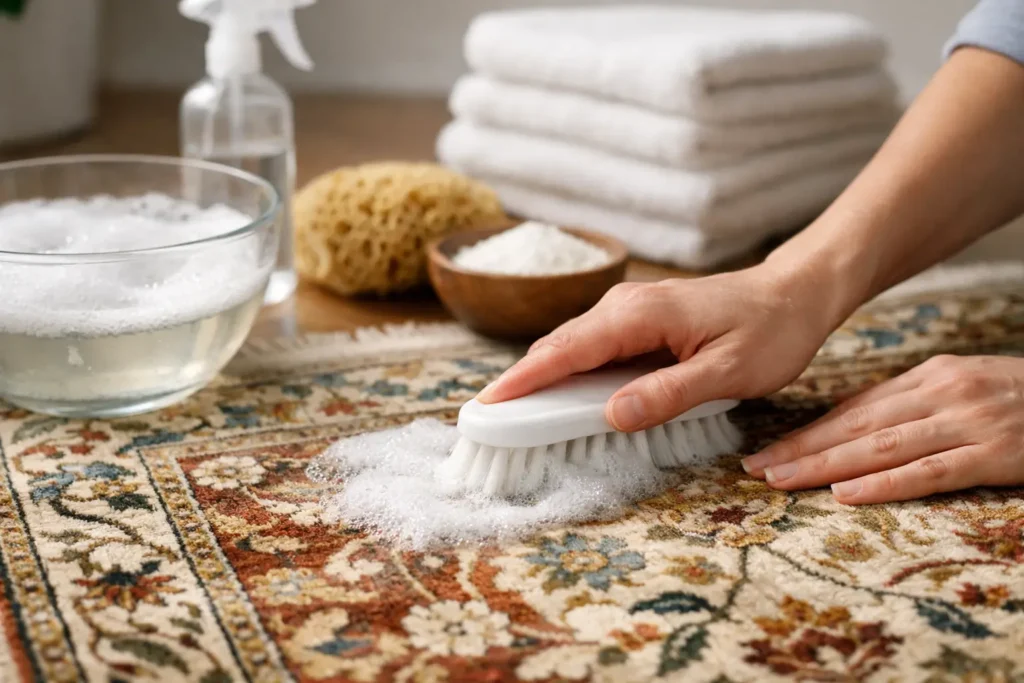
Do not scrub the surface with a brush or rough cloth. Friction can roughen the silk, flatten the texture and create a worn-looking patch. Do not soak the rug or use a bucket-and-sponge method. Excess moisture can lead to shrinkage, browning, dye migration and odours if drying is slow.
It is also best to avoid steam cleaning a silk rug at home. While steam works well on some carpet types, silk can react badly to the combination of heat and moisture. The same caution applies to hiring standard carpet cleaning machines. They are usually designed for broaderloom carpet or hardier rug fibres, not delicate handmade silk.
Drying in direct sun is another risk. It may seem practical after spot cleaning, but strong sunlight can fade dyes and make fibres brittle over time. Gentle airflow indoors is the safer option.
When professional silk rug cleaning is the better choice
There is a point where home care stops being sensible. If the rug has a stain that has set, an odour, visible traffic soiling, pet contamination, or a generally dull appearance across the whole surface, professional silk rug cleaning is usually the safer and more effective path.
This is especially true for valuable handmade rugs, heirloom pieces and rugs with deep reds, blues or other rich dyes. Colour stability needs to be assessed before any wet treatment. A trained technician can identify fibre type, construction, dye sensitivity and the least risky cleaning method.
Low-moisture and controlled-cleaning systems are often the best fit for delicate rugs because they reduce drying time and limit the chance of over-wetting. Safe products matter too. Eco-friendly, fibre-appropriate solutions are not just better for the rug. They are also a better fit for households with children, pets or allergy concerns.
For property managers and business owners, specialist cleaning also protects presentation and asset value. A damaged silk rug in a reception area, boardroom or styled rental property is harder to explain than a straightforward maintenance booking.
Choosing a service for silk rug cleaning
Not every carpet cleaner is equipped to handle silk. When comparing providers, ask direct questions about their experience with silk and other delicate fibres. A reliable operator should be able to explain their assessment process, moisture control, drying method and what is and is not safe for the rug.
Look for clear pricing, realistic expectations and a willingness to talk through risk. With silk, no trustworthy cleaner should promise miracles without seeing the rug first. Honest advice is a good sign. So is a service model built around safe products, technical training and customer protection.
For Adelaide households and workplaces, a local specialist such as Inverclean can also offer practical advantages – faster response, transparent quoting and methods designed to minimise disruption while protecting indoor hygiene.
How to keep a silk rug looking better for longer
Prevention is always cheaper than restoration. Use the rug in a lower-moisture area of the home if possible and keep it away from direct, prolonged sun. A quality rug pad underneath can reduce movement and wear, especially in busy spaces.
Take shoes off on delicate rugs where practical. Fine grit acts like sandpaper underfoot, gradually dulling the finish. If pets spend time near the rug, keep claws trimmed and address accidents immediately.
Regular maintenance should be gentle and consistent rather than occasional and heavy-handed. That approach preserves the pile, protects the colour and reduces the need for stronger intervention later.
Silk rugs reward careful ownership. They bring warmth, detail and quiet luxury to a space, but they do best with a lighter touch than most people expect. If you remember anything, let it be this: the safest clean is the one that respects how delicate the fibres really are.