Pet Stain Carpet Treatment That Actually Works
That small spot near the sofa rarely stays small for long. With pets, a visible stain is often only part of the problem. The real challenge with pet stain carpet treatment is what sits below the surface – urine crystals, bacteria, odour compounds and moisture that can keep spreading through the carpet pile and into the backing.
For Adelaide households, that matters for more than appearance. Pet accidents can affect indoor hygiene, trigger lingering smells on warm days and shorten the life of otherwise good carpet. If you act quickly and use the right method, many fresh stains can be improved at home. But older stains, repeat accidents and strong odours usually need a more technical approach.
Why pet stains are harder to treat than other spills
A dropped coffee or muddy footprint tends to stay close to the surface. Pet urine behaves differently. It can travel through the fibres, soak into the underlay and leave behind concentrated salts and organic matter as it dries. Even if the carpet looks cleaner after a quick scrub, the source of the odour may still be there.
This is why some DIY efforts seem to work for a day or two, then the smell returns. Moisture in the air can reactivate the residue, and pets are often drawn back to the same area because they can still detect what people cannot. Treatment has to address both the stain you can see and the contamination you cannot.
Faeces and vomit create a different issue. They can leave dye-based staining, greasy residue and bacteria on the fibres. The right response depends on the type of accident, the carpet fibre and how long the material has been sitting there.
Pet stain carpet treatment starts with speed
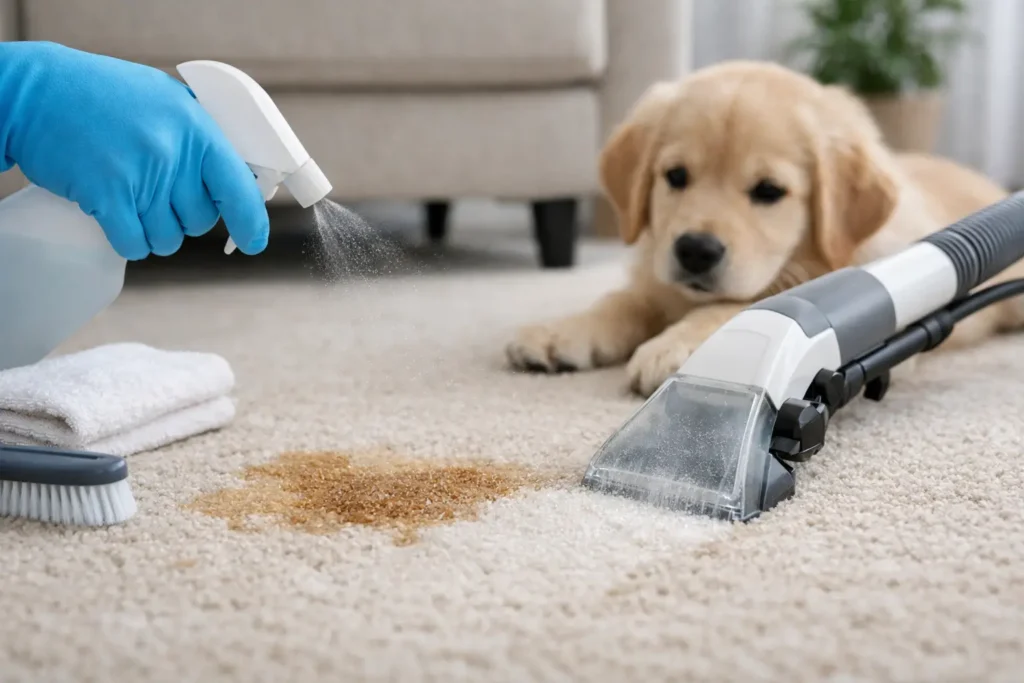
The first few minutes make a real difference. If the stain is fresh, blotting is more useful than scrubbing. Press clean white towels or paper towel firmly onto the area to absorb as much liquid as possible. Replace them as they become damp and keep going until transfer is minimal.
Avoid rubbing the carpet aggressively. That pushes contamination deeper and can rough up the fibres, especially on softer residential carpets. Once excess moisture is removed, a small amount of cool water can be used to dilute the affected spot, followed by more blotting. The goal is control, not saturation.
Hot water is usually a poor choice for urine stains. Heat can set odours and encourage proteins to bond more firmly with fibres. The same caution applies to strongly perfumed cleaners that mask smells without removing the source.
What to avoid when treating pet accidents at home
Plenty of common cleaning advice creates extra work later. Bleach is too harsh for most carpets and can damage colour, backing and nearby surfaces. Standard supermarket detergents may leave a sticky residue that attracts more soil. Steam from domestic units can also make some pet-related staining worse if the contamination has not been properly neutralised first.
Vinegar has a place in light household cleaning, but it is not a complete solution for every pet accident. In some cases it helps reduce odour temporarily. In others, it simply adds moisture and leaves part of the contamination behind. Baking soda can absorb some smell on the surface, yet it does not reach the underlay where much of the problem may be sitting.
This is where homeowners often lose time. The carpet may look acceptable from above, but the smell returns and the pet keeps revisiting the same patch.
The best treatment depends on the stain type and carpet fibre
Not all carpets respond the same way. Synthetic fibres such as nylon and polypropylene are generally more forgiving than wool, which is more sensitive to alkalinity, heat and over-wetting. A treatment that is fine for one carpet can cause browning, distortion or texture damage in another.
Fresh urine on synthetic carpet may respond well to prompt flushing, extraction and enzyme or oxidising treatment. Older urine stains often need deeper deodorisation and repeated extraction to remove built-up residue. Vomit may require a different chemistry again because of acidity, pigments and food oils.
This is why professional assessment matters. A trained technician will look at the fibre type, age of the stain, amount of contamination and whether the underlay or subfloor may also be affected. Sometimes the answer is straightforward cleaning. Sometimes the affected section needs more intensive restoration work.
How professional pet stain carpet treatment works
Professional treatment is designed to get beyond surface cleaning. The process usually begins with identifying the contaminated areas, including spots that are not immediately visible. From there, the stain is treated with solutions selected for the specific contamination rather than a one-size-fits-all product.
In many cases, the area needs controlled flushing and extraction to pull residue out of the carpet and backing. This is especially important for urine, where crystals can remain after the visible moisture has gone. If odour has settled deeper, deodorising treatment may be needed to neutralise the source instead of covering it.
For households concerned about pets, children or allergies, product safety matters just as much as stain removal. A professional service should use methods and solutions that are effective without leaving the carpet overly wet or loaded with harsh chemical residue. Fast drying is also important because long drying times increase inconvenience and can create further hygiene concerns.
At this point, the difference between DIY cleaning and specialist care becomes clear. Proper equipment can recover more moisture, remove more contamination and reduce the risk of recurring odour.
Odour removal is often the real test
A stain that looks gone but still smells is not fully treated. Pet odour can cling to carpet fibres, settle into the underlay and affect the air quality of the room. In rental properties and commercial spaces, this becomes more than a comfort issue. It can influence inspections, complaints and the general perception of cleanliness.
Effective odour treatment usually means locating all affected areas, not just the obvious one. Pets may have had several small accidents over time, particularly around doorways, beds or corners of a room. Missing one patch can leave the overall smell unresolved.
This is also where antimicrobial treatment can add value after cleaning. Once the contamination has been removed, surface protection can support a more hygienic finish and help maintain freshness between professional cleans.
When home treatment is enough and when it is not
A single fresh accident on a low-pile synthetic carpet can sometimes be managed well at home if you act immediately. Blotting, careful rinsing and avoiding the wrong products may prevent lasting damage.
It is time to call a professional when the stain is older than a few hours, the smell keeps returning, the carpet is wool or delicate, the pet has used the same area more than once, or the contamination has likely reached the underlay. The same applies if you are preparing a property for inspection, sale or end-of-lease requirements. In those situations, partial improvement is usually not enough.
Commercial premises have an even lower tolerance for lingering odour or visible marking. Offices, waiting areas and shared spaces need treatment that restores presentation quickly and allows the area to return to use without major disruption.
Preventing repeat staining after treatment
Cleaning the carpet is only one part of the solution. Pets often return to familiar spots if the scent remains or if the original cause has not been addressed. After treatment, keep the area dry, monitor your pet’s behaviour and speak with your vet if accidents are becoming frequent or unusual.
Regular professional carpet maintenance also helps. Built-up soil and residue can trap odours more easily, while a clean, well-maintained carpet is simpler to treat when accidents do happen. For homes with pets, quick drying methods and hygienic protective treatments make a noticeable difference in day-to-day comfort.
For Adelaide homes and businesses, the best results usually come from treating the issue early and properly. A trusted local specialist such as Inverclean can assess the carpet, remove contamination safely and help protect the space from ongoing odour and hygiene problems.
Pet accidents are frustrating, but they do not have to become permanent. The sooner the right treatment is used, the better the chance of keeping your carpet cleaner, fresher and genuinely healthier to live with.