Mattress Cleaning for Allergies That Works
If you wake up with a blocked nose, itchy eyes or a scratchy throat, your mattress may be part of the problem. Mattress cleaning for allergies is not just about freshening up the bed. It is about reducing the dust mites, skin cells, pet dander and trapped moisture that can build up deep in the fibres and affect the air you breathe every night.
A mattress is one of the hardest-working items in the home, yet it is often cleaned the least. We spend hours on it every day, and over time it collects sweat, body oils, dead skin and airborne particles. For allergy-sensitive households, that build-up creates the perfect environment for irritation. The issue is not always visible staining or odour. Often, it is what you cannot see that causes the most trouble.
Why mattresses trigger allergy symptoms
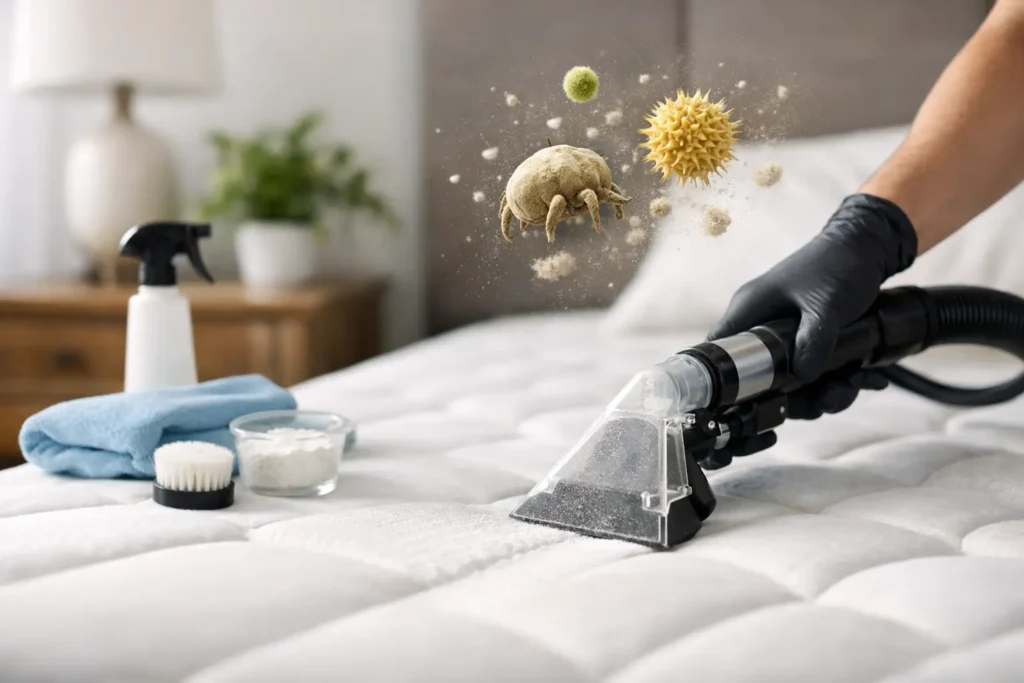
Most people assume allergies inside the home come from carpets, curtains or pets alone. Those can all play a role, but mattresses deserve just as much attention. A warm mattress with steady humidity from body heat creates conditions that dust mites love. These microscopic pests are not the allergy itself. The real trigger is usually the proteins in their waste particles, which become part of the dust trapped in the bed.
Add pet hair, pollen carried in from outside, mould spores in humid conditions and general household dust, and the mattress turns into a concentrated source of irritants. Because your face is in close contact with the bedding for hours at a time, exposure is ongoing and hard to ignore. That is why symptoms often feel worse overnight or first thing in the morning.
Children, asthma sufferers and anyone with sensitive skin usually notice this more quickly. You may see sneezing at bedtime, coughing through the night, eczema flare-ups or a feeling that the bedroom never quite feels clean. In many homes, the mattress is contributing more than people realise.
What mattress cleaning for allergies should actually do
Not all cleaning delivers the same result. For an allergy-prone home, the goal is not to mask odours or make the surface look tidier. Effective mattress cleaning for allergies should remove as much embedded dust, allergen residue and biological matter as possible while keeping moisture to a minimum.
That last part matters. Overwetting a mattress can create a new problem by increasing drying time and encouraging microbial growth. A sound cleaning method focuses on extraction, targeted treatment and fast drying rather than soaking the mattress. Safe, low-residue products are also important, especially in bedrooms used by children or people with respiratory sensitivity.
There is a trade-off here. A quick DIY freshen-up can help between professional cleans, but it rarely reaches the deeper layers where the main allergen load sits. On the other hand, an aggressive wet clean may seem thorough but can be risky if drying conditions are poor. The best outcome usually comes from a method designed specifically for soft furnishings and indoor hygiene, not a one-size-fits-all approach.
Signs your mattress needs professional attention
Sometimes the clues are obvious, such as spills, stains or lingering smells. More often, the signs are subtle. If allergy symptoms ease when you sleep elsewhere, that is worth paying attention to. If the bed has not had a proper clean in years, it is likely carrying a significant amount of settled debris.
Another common sign is that sheets seem to lose freshness quickly, even when washed regularly. That can point to contamination sitting below the bedding rather than on it. Households with pets, young children or high humidity should also be more proactive, because their mattresses are exposed to more frequent soiling and allergen transfer.
For rental properties and managed homes, mattress condition also affects presentation and hygiene standards. A clean-looking room can still have an unhealthy sleep surface if the mattress has been neglected between occupants.
How to reduce allergens between cleans
Professional cleaning is the heavy lifting, but everyday habits make a real difference. Washing sheets weekly in warm to hot water helps remove skin cells and dust before they settle deeper into the mattress. Using a quality mattress protector is one of the simplest ways to reduce allergen build-up, especially if it is washed regularly.
Vacuuming the mattress surface can help, but only if the vacuum has good filtration. Otherwise, some fine particles may simply be disturbed and recirculated. It also helps to air out the room, manage indoor humidity and keep pets off the bed if allergies are severe. None of these steps replaces a proper clean, but together they lower the load between services.
There is also the question of frequency. It depends on the household. For a single adult in a well-ventilated room, occasional professional cleaning may be enough. For families with pets, children or known allergy issues, more regular servicing is usually the safer choice.
The difference professional cleaning makes
A professionally cleaned mattress does more than look better. It can reduce the burden of allergens in one of the most intimate areas of the home. That matters because sleep quality is closely tied to breathing comfort, skin comfort and the general sense that your bedroom is a healthy place to rest.
Experienced technicians also know how to assess the material, level of contamination and suitable cleaning method before they begin. That is important, because mattresses are made from different fibres and constructions, and some respond better than others to certain treatments. A careful approach protects the mattress while targeting the contamination that affects hygiene.
For Adelaide households, fast drying is especially valuable. Nobody wants a damp bed out of action for days. Safe, eco-friendly products and controlled moisture methods support a cleaner result without adding unnecessary chemical residue or disruption to the home.
Mattress cleaning for allergies in family homes
In family homes, allergies are rarely isolated to one source. Carpet, upholstery, rugs and mattresses all interact as part of the indoor environment. Dust moves. Pet dander travels. Pollen is tracked in and settles across soft surfaces. If one area is cleaned while another is heavily contaminated, the improvement may be limited.
That is why some households get the best results when mattress cleaning is treated as part of broader interior hygiene rather than a stand-alone fix. If the child’s bedroom carpet is holding dust and the mattress is doing the same, both may need attention to create a noticeable change. The same goes for upholstered bedheads, fabric lounges and rugs in bedrooms.
This does not mean every home needs every service at once. It means the right cleaning plan should reflect how the home is actually used. A professional can usually identify the pressure points and recommend what is worth doing now versus what can wait.
What to look for in a mattress cleaning service
When allergies are involved, the cheapest quote is not always the best value. Ask how the mattress will be cleaned, what products are used and how long drying is expected to take. Clear answers matter. So does transparency around pricing and what is included.
It is also worth choosing a provider that understands indoor health, not just stain removal. Certified processes, safe chemistry and a practical understanding of soft furnishing care all point to a service designed for real hygiene outcomes. In Adelaide, local knowledge counts too. Climate, housing styles and common household conditions can all affect what cleaning method makes sense.
At Inverclean, the focus is on safe, technically sound cleaning that improves indoor hygiene without unnecessary fuss. For allergy-sensitive homes, that means careful treatment, fast drying and clear communication about what will deliver the best result.
When replacement may be the better option
Cleaning can improve many mattresses, but it is not a miracle cure for every situation. If a mattress is very old, structurally failing, heavily mould-affected or carrying long-term contamination deep into damaged layers, replacement may be the smarter investment. A professional service should be honest about that.
This is where trust matters. Good advice is not about selling the biggest job. It is about helping you decide whether cleaning will provide meaningful improvement or whether the mattress has reached the end of its useful life. In allergy management, that distinction saves time, money and frustration.
A cleaner mattress will not solve every sniffle, but it can remove one of the most constant sources of exposure in the home. If your bedroom feels like the place where symptoms settle in instead of switch off, the mattress is worth a closer look. Cleaner sleep starts with a surface that is not quietly working against you.