Eco Friendly Upholstery Cleaning That Works
That lounge chair everyone uses usually tells the truth before the rest of the room does. A sofa can look fine at a glance, then hold weeks of body oils, pet dander, food spills and dust deep in the fabric. That is why eco friendly upholstery cleaning matters – not as a marketing extra, but as a practical way to keep soft furnishings cleaner, safer and more pleasant to live with.
For Adelaide homes and workplaces, the best upholstery cleaning is not simply about making fabric look brighter. It is about removing the soil and contaminants that settle below the surface, without leaving behind harsh residues or soaking furniture for days. When the method is right, you get cleaner seating, improved indoor hygiene and far less disruption.
What eco friendly upholstery cleaning actually means
The phrase gets used loosely, so it helps to be clear. Eco friendly upholstery cleaning should mean more than a nice-smelling product with a green label. In practical terms, it refers to cleaning methods and solutions designed to reduce unnecessary chemical exposure, limit water waste where possible, and clean effectively without compromising the people using the furniture.
That matters most in real households and businesses. If you have children playing on the couch, pets sleeping on upholstered chairs, staff using waiting room seating all day, or tenants moving through a property regularly, residue and drying time are not small details. They directly affect comfort, hygiene and how quickly the furniture can be used again.
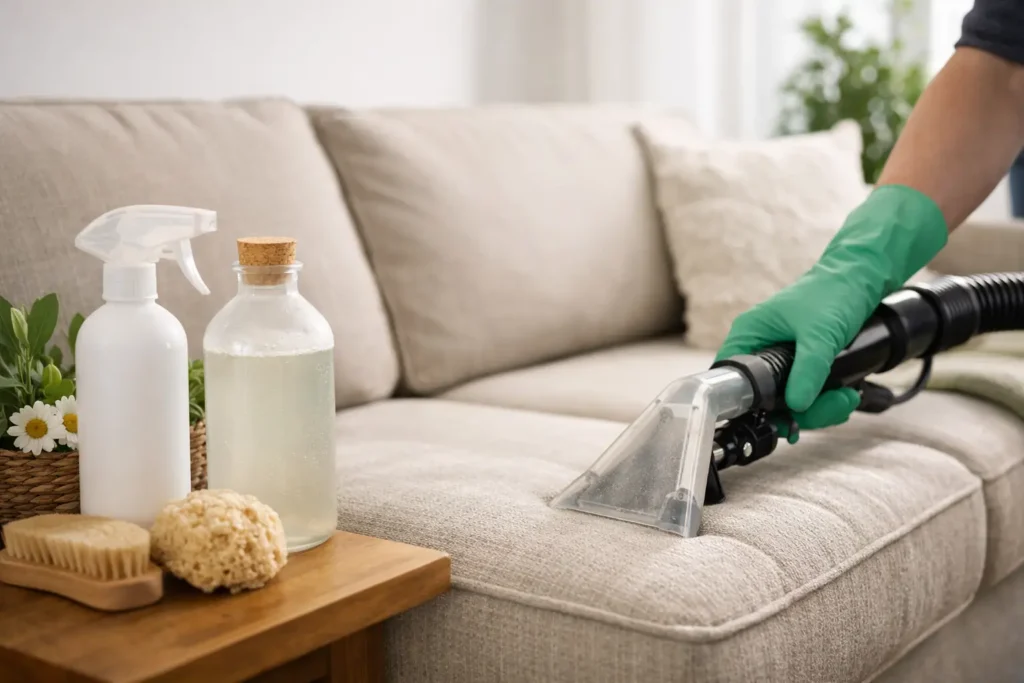
A genuinely safer approach usually combines low-toxicity cleaning agents, controlled moisture, fabric-specific techniques and proper soil extraction. The goal is not to flood the upholstery and mask odours. The goal is to remove what should not be there while protecting the material itself.
Why standard upholstery cleaning can cause problems
Some cleaning methods still rely on excessive water, overly aggressive detergents or one-size-fits-all treatment. That can create new issues while trying to solve the original one.
Overwetting is a common example. When too much moisture is pushed into lounges, dining chairs or office partitions, drying can drag on far longer than expected. That increases the chance of musty smells, watermarking and, in the wrong conditions, microbial growth. For busy homes and commercial spaces, it also means furniture is out of action when you need it most.
Harsh products are another problem. Strong chemicals may lift a stain quickly, but they can also affect delicate fibres, strip colour, or leave residues behind. People with asthma, allergies or chemical sensitivities often notice that straight away. Even when there is no obvious reaction, sticky residue can attract fresh soil and cause upholstery to re-soil faster.
This is where professional judgement matters. Not every fabric responds the same way, and not every stain should be treated aggressively. A safer method often gets the better long-term result.
The real benefits for homes and businesses
Eco friendly upholstery cleaning is often chosen for safety, but the benefits are broader than that. It supports a healthier indoor environment by reducing trapped dust, allergens and odours in the fabric. That can make a noticeable difference in family rooms, bedrooms, offices, reception areas and shared seating zones.
Appearance matters too. Upholstery tends to dull gradually, so people often do not notice the change until the fabric is cleaned properly. Once built-up soil is removed, colours can look fresher and the whole room feels better kept. In commercial settings, that affects presentation. In homes, it simply makes furniture feel worth keeping.
Then there is the practical side. Fast drying methods reduce inconvenience. Safer solutions are a better fit for households with children and pets. Professional stain treatment can help extend the life of expensive furniture, which is often far more cost-effective than early replacement.
How professional eco friendly upholstery cleaning works
A proper service starts with inspection, not guesswork. The cleaner checks the upholstery fibre, construction, dye stability, wear level and staining. That step determines what can be cleaned safely and how much moisture the fabric can handle.
Pre-treatment is then used to loosen embedded soil and target spots such as food spills, drink marks, body oils or pet accidents. The cleaning solution should suit the fabric rather than forcing the fabric to suit the product. Synthetic lounges, delicate woven chairs and commercial upholstered panels all need different handling.
From there, the main clean focuses on controlled soil removal. In many cases, low-moisture or dry cleaning methods are the smart option because they clean thoroughly while keeping drying times short. That matters in Adelaide conditions, especially when furniture is in constant use or airflow indoors is limited.
Deodorising and antimicrobial protection may also be appropriate, but only when they add value to the result. If upholstery has been affected by heavy use, pets or lingering odours, this extra layer can support hygiene and help keep furnishings fresher between cleans. When applied correctly, it is part of a considered process rather than an upsell.
Eco friendly upholstery cleaning at home
In homes, upholstered furniture often carries the wear of daily life more than carpet does. People eat on the couch, children climb over armrests, pets settle into favourite corners and dust gathers where vacuuming cannot reach deeply enough.
For families, the biggest concern is usually safety. They want effective stain and odour removal without strong chemical smells or long drying delays. That is a reasonable expectation, especially in homes where the sofa is used again the same evening.
For allergy-sensitive households, the issue can be even more specific. Dust, dander and settled particles in upholstery can affect comfort without being visible. Professional cleaning helps remove those contaminants rather than just freshening the surface. It is not a medical treatment, of course, but it can support a cleaner indoor environment.
Pet owners also benefit from a more tailored approach. Pet-related staining and odours need more than a basic once-over, yet harsh treatment can damage fabric or leave noticeable residue. The right process addresses the cause of the problem while preserving the upholstery.
Eco friendly upholstery cleaning for commercial spaces
In offices, waiting areas, clinics, accommodation settings and other workplaces, upholstery cleanliness affects more than appearance. Seating gets used by many people, often every day, and that quickly builds up soil, odours and wear.
Commercial clients usually need three things at once: visible results, minimal downtime and straightforward pricing. Eco friendly upholstery cleaning suits that need well when paired with low-moisture methods and clear quoting. Seating can often be cleaned with less disruption to staff, customers or tenants, and the space returns to normal faster.
Presentation is another factor. Marked, tired upholstery can make an otherwise clean premises feel neglected. Clean furniture supports a more professional impression and contributes to the overall standard of the site. For property managers, it can also help maintain assets between tenancies or routine inspections.
What to look for in a provider
Not every cleaning service offering upholstery work delivers the same standard. The safest choice is a provider that explains its process clearly, uses fabric-appropriate methods and avoids vague claims.
Look for experience across different upholstery types, transparent pricing and a clear focus on safe cleaning rather than aggressive treatment. Fast drying capability is a genuine advantage, particularly in occupied homes and businesses. So is a satisfaction guarantee, because it shows the company stands behind the result.
It also helps when the cleaner understands broader interior hygiene, not just spot removal. Upholstery sits within a bigger picture of indoor cleanliness that can include carpets, rugs, mattresses and high-use soft surfaces. A company with that technical range is usually better placed to assess what the furniture actually needs.
For many Adelaide customers, that combination of safety, certified standards, quick drying results and practical protection is exactly what makes a professional service worthwhile.
When it is worth booking a clean
If upholstery looks visibly stained, smells musty, feels dull or has not been professionally cleaned in years, the answer is obvious. But even furniture that appears presentable can still hold a surprising amount of soil.
A maintenance clean makes sense after winter, before hosting guests, at the end of a lease, after a tenancy turnover, or whenever pets and children have given the furniture a harder run than usual. In commercial settings, regular scheduled cleaning is often the better option because it prevents heavy build-up and keeps presentation consistent.
There is also the replacement question. Many people assume tired upholstery is at the end of its life when it is really carrying accumulated soil. A skilled clean can restore appearance and usability far more than expected, provided the fabric is still structurally sound.
Good upholstery cleaning should leave furniture cleaner, fresher and ready to use without fuss. That is the standard worth expecting. When the process is eco friendly, technically sound and suited to the fabric, you are not choosing between safety and results. You are choosing a better way to care for the furniture you rely on every day.