Dry Cleaning vs Steam Cleaning
A carpet can look clean at first glance and still hold dust, oils, allergens and old spills deep in the pile. That is why dry cleaning vs steam cleaning is one of the most common questions we hear from Adelaide households and businesses. The right method depends on the fabric, the level of soiling, how quickly you need the area back in use, and whether hygiene, stain removal or moisture sensitivity is the bigger priority.
Dry cleaning vs steam cleaning: what is the real difference?
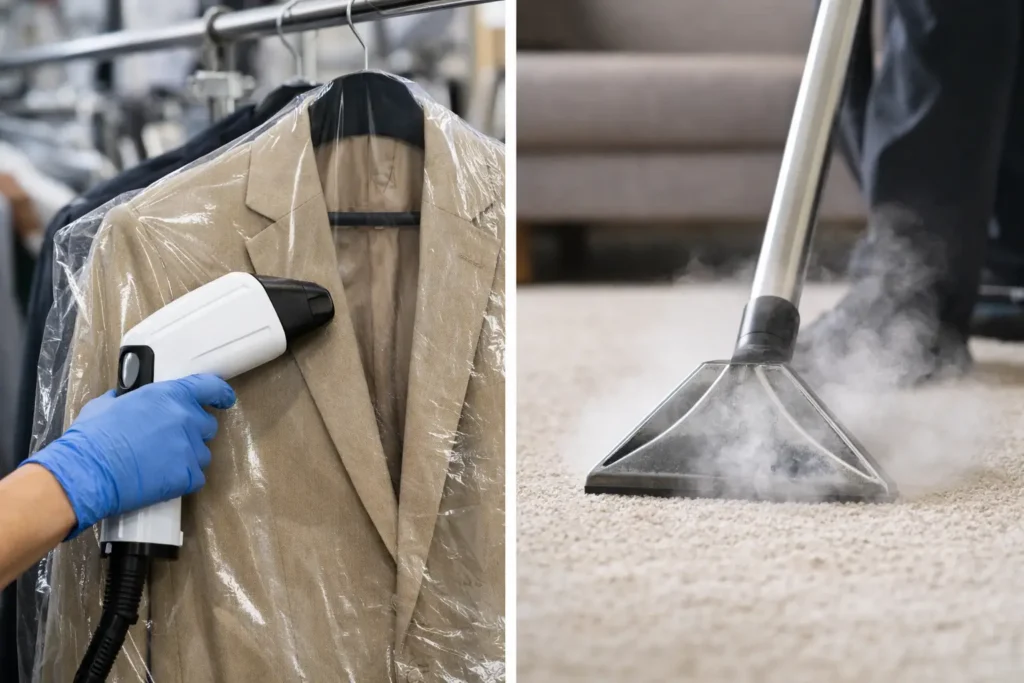
The biggest difference is moisture and how the soil is removed. Dry cleaning uses very low moisture methods, paired with specialised compounds or cleaning solutions that loosen soil so it can be lifted away with professional equipment. Steam cleaning, also called hot water extraction, uses heated water and cleaning agents to flush out dirt, residues and contaminants from deeper within the fibres.
Despite the name, dry cleaning is not always completely dry. In carpet and upholstery cleaning, it usually means low-moisture cleaning rather than zero-moisture cleaning. That matters because many people expect a dry clean to involve no water at all, when in practice there is often a controlled amount used to help break down soils.
Steam cleaning is also slightly misunderstood. It does not rely on billowing steam alone. Professional systems use hot water under pressure, followed by strong extraction, to rinse and recover loosened soil. The result can be a more thorough deep clean, but drying times are usually longer than with low-moisture methods.
When dry cleaning makes more sense
Dry cleaning is often the better fit when speed matters. In offices, retail spaces, rental properties and busy family homes, waiting half a day or more for a carpet to dry is not always practical. Low-moisture cleaning can reduce downtime and help get rooms back into use sooner.
It is also a sensible option for delicate fibres or settings where over-wetting could cause problems. Some rugs, upholstery fabrics and specialty floor coverings respond better to careful moisture control. The same applies in cooler weather or poorly ventilated rooms, where slow drying can increase the risk of odour, mould growth or resoiling.
Another advantage is appearance improvement with minimal disruption. For carpets with general traffic marks, light to moderate soiling and no major contamination, dry cleaning can refresh the look and feel of the fibres very effectively. Many commercial clients prefer it for routine maintenance because it supports regular presentation without closing off large areas for long.
That said, dry cleaning has limits. If a carpet is heavily soiled, affected by pet accidents, or carrying built-up residues from DIY products, a low-moisture method may not be enough on its own. It can deliver excellent maintenance cleaning, but it is not the answer to every cleaning problem.
When steam cleaning is the better choice
Steam cleaning comes into its own when you need a more intensive flush of the fibres. Homes with pets, children, allergy concerns or years of embedded soil often benefit from hot water extraction because it can remove more of what is trapped below the surface.
This method is especially useful for odours, sticky residues, tracked-in grime and neglected carpets that have gone beyond simple surface dullness. When performed correctly, steam cleaning can improve not just appearance but overall hygiene as well. That is important for bedrooms, family rooms, waiting areas and any space where soft furnishings collect day-to-day contamination.
For end-of-lease situations, property managers and tenants often choose steam cleaning because it is widely recognised as a deeper restorative clean. It can help reset heavily used carpets and improve inspection presentation. In commercial settings, periodic steam cleaning is often used alongside more frequent low-moisture maintenance to keep carpets in better long-term condition.
The trade-off is drying time. Even with strong extraction and good airflow, carpets and upholstery cleaned this way usually need longer before normal foot traffic resumes. If the job is done poorly, over-wetting can also leave behind issues such as browning, lingering dampness or fibre distortion. That is why method and operator skill matter just as much as the machine.
Which method is healthier for indoor spaces?
This is where the conversation gets more nuanced. A lot of people assume steam cleaning is always healthier because it uses hot water and reaches deeper into the fibres. Often, that is true for removing embedded contaminants. If the goal is to reduce accumulated allergens, body oils, soil and some bacteria from deep within carpets or upholstery, hot water extraction has a strong case.
But health outcomes are not only about depth. They are also about safe chemistry, proper drying and avoiding residue. A poorly performed steam clean that leaves excess moisture behind can create new problems. Likewise, a low-quality dry clean that leaves chemical residue in the fibres is not ideal for children, pets or allergy-sensitive households.
The healthier option is the one matched properly to the surface and completed with safe products, correct equipment and controlled drying. For many Adelaide homes, that means choosing a technician who understands fabric types, stain conditions and moisture management rather than assuming one method suits every room.
Dry cleaning vs steam cleaning for carpets, rugs and upholstery
Carpets often respond well to either method, depending on their condition. A well-maintained carpet in an office or lounge room may benefit from low-moisture cleaning for regular upkeep. A carpet with pet odours, food spills or ground-in traffic lanes may need steam cleaning to achieve a better result.
Rugs are more varied. Fibre type, dye stability, construction and backing all need consideration. Wool, silk blends and hand-finished rugs can react badly to the wrong process. In these cases, the question is not simply dry cleaning vs steam cleaning, but what the specific rug can safely tolerate while still getting genuinely clean.
Upholstery is similar. Some fabrics clean beautifully with low-moisture methods because they dry fast and avoid overwetting the padding. Others need a deeper extraction approach to remove body oils, stains and odours. Leather is a separate category again and should be cleaned and conditioned with specialist products rather than treated like standard fabric furniture.
The role of drying time and convenience
For many customers, convenience decides the method before anything else. If you have children moving through the house, staff in and out of workstations, or a tenant handover on a tight schedule, a quick-drying option can be the smarter choice.
Fast drying is not only about comfort. It also helps reduce disruption and lowers the chance of dirt sticking back to damp fibres. This is one reason professional low-moisture systems remain popular. They bridge the gap between appearance improvement and practical turnaround.
Still, convenience should not override cleaning needs. A carpet that genuinely requires deep extraction will not benefit from a lighter clean just because it dries faster. The best providers explain that honestly and recommend the method based on condition, not simply the easier sale.
What to ask before booking
If you are comparing services, ask how the technician chooses between methods. A professional should assess fibre type, soiling level, stains, odours and drying conditions before deciding. Transparent pricing matters too, especially if you are trying to avoid surprise add-ons once the job starts.
It is also worth asking about product safety, stain treatment, drying expectations and aftercare. For homes with pets, children or allergy concerns, those details are not minor extras. They are part of choosing a service that protects the people using the space every day.
At Inverclean, this practical approach matters because customers are not just paying for cleaner carpet. They want a safer, fresher indoor environment, less downtime, clear quoting and confidence that the cleaning method suits the material.
So which one should you choose?
If your priority is quick drying, routine maintenance and low disruption, dry cleaning is often the better fit. If your carpet or upholstery needs a deeper restorative clean, steam cleaning will usually deliver more thorough soil removal. Neither method is automatically best in every case.
The smart choice is the one that matches the surface, the level of use and the outcome you actually need. A good cleaning service will tell you when low-moisture cleaning is enough, when hot water extraction is worth it, and when delicate materials need a more specialised treatment.
Clean floors and furnishings do more than improve appearance. They make a room feel healthier, easier to use and better cared for – and that is usually what people are really after when they book a professional clean.