What a Rug Cleaning Specialist Really Does
That expensive rug in the lounge does not usually look dirty all at once. It dulls gradually. Colours lose their sharpness, traffic lanes flatten, pet odours settle in, and fine grit starts wearing away at the fibres every time someone walks across it. That is where a rug cleaning specialist makes a real difference. Proper rug care is not just about making a rug look fresher for a few days. It is about protecting the material, improving indoor hygiene, and cleaning it in a way that does not create shrinkage, dye bleed, fibre damage, or long drying times.
For many Adelaide households and workplaces, rugs do more than decorate a room. They soften hard floors, reduce noise, add warmth, and often carry a fair bit of value, whether financial or sentimental. A machine-made hallway rug, a delicate silk blend, and a hand-finished wool rug cannot be treated the same way. The cleaning method has to match the fibre, the construction, the dyes, and the kind of soiling involved.
Why a rug cleaning specialist matters
A rug sits in a difficult position inside any property. It catches dry soil from shoes, food spills, skin cells, pet hair, moisture, and airborne dust, all while being more delicate than broadloom carpet in many cases. That combination is why general surface cleaning often falls short.
A rug cleaning specialist starts by identifying what the rug can safely handle. Wool reacts differently from polypropylene. Cotton backings can behave differently again. Fringes may hold on to soil and discolour quickly. Natural dyes may need extra caution. If the wrong product is used, a stain can set further, colours can run, or the pile can lose its finish.
This is also why quick DIY spot cleaning can become expensive. Scrubbing a spill with supermarket stain remover might appear to help in the moment, but it can rough up fibres, spread the stain, or leave behind residue that attracts more soil. Professional cleaning is less about harshness and more about control.
Not all rugs need the same cleaning method
The safest result usually comes from matching the process to the rug, not forcing every rug through the same system. This is where technical knowledge matters.
Fibre type changes everything
Wool rugs are popular because they are durable, naturally insulating, and look beautiful when maintained well. They also need careful handling. Overwetting, aggressive chemistry, or high heat can affect texture and shape. Synthetic rugs are often more forgiving, but they still benefit from the correct pre-treatment and rinse approach so residues are not left behind.
Silk and silk-blend rugs require even more caution. These fibres can be sensitive to moisture, agitation, and pH imbalance. A specialised clean helps preserve softness, sheen, and colour variation rather than stripping them away.
Construction affects cleaning risk
Some rugs are tightly woven and stable. Others have looser backing, hand-finished edges, or decorative fringe that can distort if handled poorly. Flatweaves, shag rugs, antique rugs, and modern designer pieces all present different cleaning considerations. The right method depends on what is underneath the visible pile as much as what is on top.
Soil, stains, and odours are different problems
Dry soil, food spills, pet accidents, and general dullness do not respond to the same treatment. A rug with embedded grit needs proper soil removal. A rug with urine contamination needs odour and hygiene treatment, not just deodoriser. A coffee spill on a light rug needs stain treatment that lifts contamination without leaving a tide mark. Good cleaning is rarely a one-step job.
What to expect from a professional rug cleaning specialist
A proper service should feel straightforward, transparent, and tailored to the rug in front of you. That begins with inspection. Before any cleaning starts, the condition of the rug should be assessed for fibre type, colour fastness, wear, previous staining attempts, and any pre-existing damage.
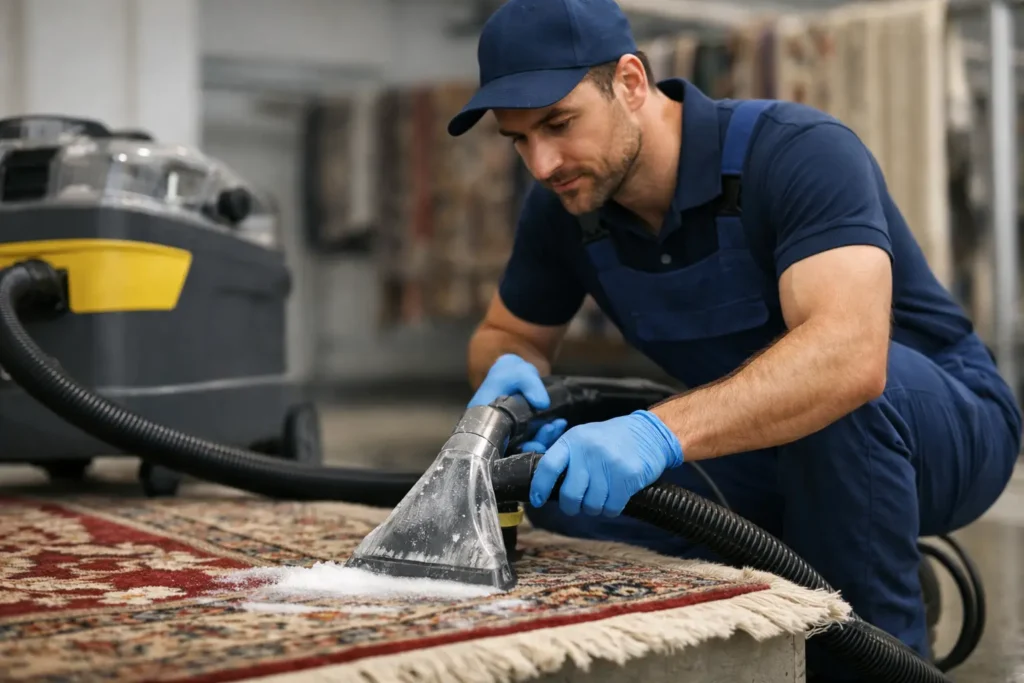
From there, the cleaning process should target both appearance and hygiene. Dry soil removal matters because loose grit acts like sandpaper within the fibres. Pre-treatment should break down oils and marks without overloading the rug with chemicals. Controlled cleaning should then remove the contamination, not simply move it around.
Drying is just as important as washing. A rug that stays damp too long can develop odours, wicking, or microbial issues. Fast, managed drying reduces disruption and lowers risk. For busy homes, tenanted properties, and commercial spaces, that matters almost as much as the clean itself.
The hygiene side people often miss
A rug can look acceptable while still holding dust, allergens, bacteria, and residues deep within the pile. That is one reason regular professional cleaning can support a healthier indoor environment, especially in homes with kids, pets, or allergy-sensitive occupants.
In offices and shared spaces, rugs also collect contamination from constant foot traffic. Staff and visitors track in fine soil, moisture, and pollutants from outdoors. Over time, this affects both presentation and cleanliness. A well-maintained rug helps a space feel cared for, but it also reduces the build-up of material that ordinary vacuuming cannot fully remove.
This is where safe chemistry and antimicrobial protection can add value, provided they are used correctly. The best results come from products and processes designed to improve hygiene without leaving strong residues or unnecessary odours behind.
When DIY is fine, and when it is not
There is a place for basic home care. Regular vacuuming, prompt blotting of fresh spills, and rotating a rug to spread wear all help. These simple habits can extend the life of the rug between professional cleans.
But there is a point where DIY stops being useful. If a stain has been there for more than a day or two, if a pet accident has soaked through, if colours are starting to dull unevenly, or if the rug smells musty after cleaning attempts, it is time for expert help. The same applies to wool, silk, handwoven, or high-value rugs. These are not the pieces to experiment on with rental machines or mixed household products.
The trade-off is simple. DIY may look cheaper at first, but the cost changes quickly if the rug ends up with browning, fibre distortion, colour loss, or lingering odour. Professional cleaning is about reducing that risk while achieving a more complete result.
Choosing the right rug cleaning specialist in Adelaide
Not every cleaner who offers rugs is truly equipped to clean them properly. If you are comparing services, look beyond price alone. A low quote can be attractive, but it does not tell you much about training, fibre knowledge, drying capability, or whether the products used are safe for children, pets, and sensitive households.
A reliable rug cleaning specialist should be clear about the process, realistic about what can and cannot be removed, and upfront about pricing. Stain reduction can depend on the type of spill, how long it has been there, and whether anyone has already treated it. Honest advice matters more than overpromising.
It also helps to choose a local operator who understands the practical needs of Adelaide homes and businesses. Fast drying, minimal disruption, safe products, and consistent service all count. For many customers, reassurance matters as much as technical skill. Knowing the job will be done carefully, with no hidden charges and no unnecessary upsell, makes the whole process easier.
That is why many people turn to experienced local providers such as Inverclean when they want rugs cleaned professionally and safely. The combination of certified methods, eco-friendly products, transparent quoting, and a satisfaction guarantee gives customers confidence that the result will be worth it.
How often should rugs be professionally cleaned?
It depends on where the rug is used and who uses it. A formal lounge rug in a low-traffic room may only need professional attention every 12 to 18 months. A family room rug with pets, children, and constant foot traffic may need it far sooner. Entry rugs, dining room rugs, and office rugs usually show wear and soiling faster because they absorb repeated daily use.
If anyone in the property has allergies, asthma, or sensitivity to dust and odours, more frequent cleaning can be worthwhile even before the rug looks visibly dirty. Waiting until a rug appears heavily soiled often means more contamination is already sitting below the surface.
A good rule is to treat professional rug cleaning as preventative maintenance, not a last resort. Rugs last longer and stay more attractive when soil is removed before it grinds deeper into the pile.
A well-cleaned rug does more than improve the look of a room. It helps the whole space feel fresher, healthier, and easier to live or work in. When the job is handled by a rug cleaning specialist who understands fibres, safety, and proper drying, you are not just cleaning a rug. You are protecting something you use every day.