How Long Does Carpet Take to Dry After Cleaning?
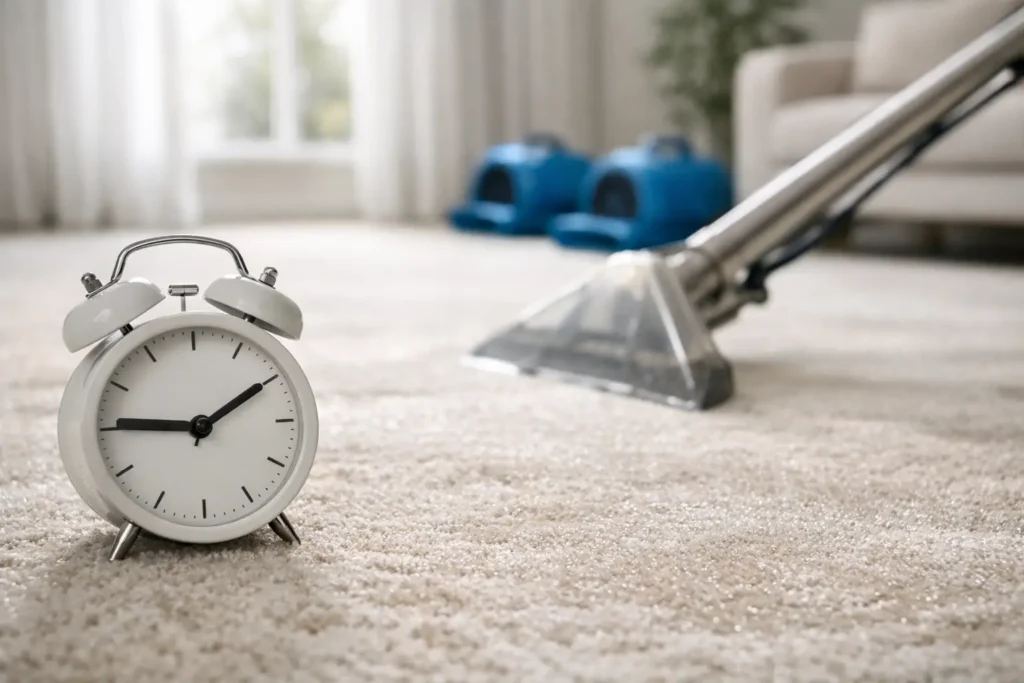
Wet socks on freshly cleaned carpet are frustrating for a simple reason – once the cleaning is done, you want the room back. If you are wondering how long does carpet take to dry after cleaning, the short answer is usually between 2 and 24 hours. The real answer depends on the cleaning method, the carpet fibre, airflow, humidity, and how much moisture was used in the first place.
For Adelaide homes and workplaces, drying time matters just as much as stain removal. Families want bedrooms and living areas usable again. Property managers need quick turnaround between tenants. Offices cannot afford damp flooring lingering into the next business day. That is why understanding what affects drying time helps you choose the right service and avoid unnecessary disruption.
How long does carpet take to dry after cleaning?
Most carpets cleaned with a low-moisture or dry cleaning system are ready much faster than carpets cleaned with traditional steam or hot water extraction. A low-moisture clean may dry in around 2 to 6 hours, and sometimes sooner in warm, well-ventilated conditions. Hot water extraction often takes 6 to 24 hours, especially if the carpet is thick or the weather is humid.
That range can sound broad, but it reflects real differences in carpet construction and cleaning technique. A loop pile carpet in an air-conditioned office can dry far more quickly than plush bedroom carpet in a closed-up house on a muggy day. The key is not just how wet the carpet feels on the surface, but how much moisture remains deep in the pile and underlay.
The cleaning method makes the biggest difference
If you have ever compared two carpet cleaning jobs and wondered why one dried in a few hours and the other stayed damp overnight, the method is usually the reason.
Low-moisture and dry carpet cleaning
Low-moisture carpet cleaning is designed to clean effectively while keeping water use under tight control. Instead of saturating the carpet, this method targets soiling with specialised products, agitation, and extraction techniques that leave far less residual moisture behind. That means faster drying, less inconvenience, and less risk of musty odours if a room has limited ventilation.
This is one reason many households with children, pets, or allergy concerns prefer dry carpet cleaning. It is easier to get back to normal quickly, and there is less chance of moisture lingering where dust and contaminants can settle.
Hot water extraction
Hot water extraction can be very effective for heavily soiled carpets, but it generally uses more water. Even with strong extraction equipment, some moisture remains in the carpet fibres and backing. If too much solution is applied, or if extraction is not strong enough, drying can stretch well beyond the ideal window.
That does not make hot water extraction a poor option in every case. It simply means drying time must be managed properly. In some settings, the deeper flush may be worth the wait. In others, a quick-drying system is the more practical choice.
What affects carpet drying time?
When customers ask how long does carpet take to dry after cleaning, they are usually trying to work out when they can walk on it, move furniture back, or let children and pets into the room. Several factors shape that timeline.
Carpet thickness and fibre type
Dense, plush carpets hold more moisture than low-pile commercial carpet. Wool can also behave differently from synthetic fibres, absorbing and releasing moisture at a different rate. Rugs and carpets with thick underlay may feel dry on top while still holding dampness below.
Humidity and weather
Adelaide conditions vary across the year, and humidity plays a major role in drying. On a dry, warm day with windows open and air moving through the room, carpets dry much faster. On a cool or humid day, moisture evaporates more slowly. Winter cleans often need extra airflow or indoor climate control to maintain a quick turnaround.
Airflow in the room
Still air slows everything down. Opening windows, switching on ceiling fans, or using air movers can make a noticeable difference. Even a professionally cleaned carpet with minimal moisture will take longer to dry in a closed room with poor ventilation.
Amount of soil in the carpet
Heavily soiled carpets often need more passes, more product, or more intensive treatment. That can increase moisture levels slightly, especially if spots and stains require extra attention. High-traffic commercial areas near entrances are a common example.
Quality of equipment and technician skill
Not all carpet cleaning produces the same drying results. Professional equipment with strong extraction removes more moisture during the clean. Just as important, an experienced technician knows how to match the method to the carpet and avoid overwetting. That technical side often makes the difference between a carpet that dries in a few hours and one that stays damp far too long.
When is it safe to walk on cleaned carpet?
In most cases, light foot traffic is fine once the carpet is only slightly damp rather than wet. Many professional cleaners recommend waiting at least a couple of hours, then using clean socks rather than shoes. That helps protect freshly cleaned fibres from bringing in new dirt before they are fully dry.
For heavier traffic, moving furniture back, or reopening a commercial area, it is better to wait until the carpet is fully dry. Damp fibres can flatten more easily, and furniture placed back too soon may trap moisture underneath. Timber furniture can also transfer stain or finish onto a damp carpet.
How to help your carpet dry faster
You do not need to do anything complicated, but a few simple steps can shorten drying time noticeably.
Open windows if the weather allows and create cross-ventilation through the room. Use fans or air conditioning to keep air moving. Avoid walking over the area more than necessary, and keep pets and children off the carpet until it is mostly dry. If furniture needs to go back sooner, use protective tabs or blocks so moisture is not trapped under the legs.
If the carpet still feels damp after the expected drying window, the first thing to check is ventilation. Often the problem is not the cleaning itself but stale indoor air slowing evaporation. If dampness persists well beyond what you were advised, it is worth contacting your cleaner for guidance.
Why fast drying matters beyond convenience
Quick drying is not just about comfort. It also supports better hygiene and better carpet care. The longer moisture sits in carpet and underlay, the more opportunity there is for odours, microbial growth, or re-soiling as lingering dampness attracts fine particles.
That is especially relevant in homes with pets, children, asthma concerns, or allergy-sensitive occupants. In commercial settings, prolonged dampness can affect presentation and create an awkward interruption for staff and visitors. A fast-drying clean reduces those risks while making the space usable sooner.
This is where modern low-moisture systems stand out. When paired with safe products, certified processes, and antimicrobial protection, they offer a practical balance of cleanliness, hygiene, and minimal downtime. For many Adelaide households and businesses, that balance is exactly what matters.
A realistic expectation for Adelaide homes and businesses
If you want a simple rule of thumb, expect around 2 to 6 hours for low-moisture carpet cleaning and 6 to 24 hours for higher-moisture methods. Thicker carpets, humid weather, and poor airflow can push drying toward the longer end. Good ventilation, lighter carpet construction, and advanced quick-dry systems can bring it down.
The best question is not only how long the carpet will take to dry, but whether the cleaning method suits your home or workplace in the first place. A family home with kids underfoot has different needs from an end-of-lease clean or a busy office fit-out. A trustworthy local cleaner should explain the likely drying time upfront, use methods that avoid overwetting, and give clear aftercare advice without hidden surprises.
At Inverclean, that practical approach matters because customers are not just paying for cleaner carpet. They are paying for a safer, fresher space they can use again without the wait dragging on longer than it should.
If you are booking a carpet clean, ask about the drying window before the job starts. The right answer should be clear, realistic, and based on your carpet, not a one-size-fits-all promise.