Commercial Carpet Maintenance Plan That Works
Carpet usually tells the truth about a workplace before anyone says a word. Flattened traffic lanes, dark entry points and old spill marks can make a clean office feel neglected. A well-built commercial carpet maintenance plan stops that slide early, protecting presentation, indoor hygiene and the life of the flooring you have already paid for.
For most Adelaide businesses, the goal is not just to make carpet look better after a problem appears. It is to keep it consistently presentable, safer underfoot and easier to manage across busy weeks, seasonal weather and changing foot traffic. That takes more than the occasional deep clean. It takes a plan that matches how the site is actually used.
What a commercial carpet maintenance plan should do
A good commercial carpet maintenance plan is not a one-size-fits-all schedule. It should be built around the type of premises, the number of people moving through it, the kind of soil coming in from outside and how much downtime your business can realistically allow.
An office with mostly desk-based staff will need a different approach from a medical practice, childcare setting or retail site. Entry areas and corridors often wear out visually long before private offices do. Boardrooms may need spot attention for coffee stains but not the same frequency of cleaning as open-plan walkways. When every area is treated the same, businesses often end up overservicing low-use spaces and missing the sections that age fastest.
A proper plan should aim to do three things at once. First, remove dry soil before it settles deep into fibres. Second, deal with spills and staining quickly enough to prevent permanent damage. Third, schedule professional cleaning often enough to restore the carpet without disrupting daily operations.
Why reactive cleaning costs more over time
Many businesses wait until carpet looks tired before calling in a cleaner. On the surface, that seems practical. In reality, reactive cleaning tends to be the more expensive path.
Soil acts like fine grit. As people walk over it, that grit cuts into fibres and dulls the finish of the carpet. Once wear becomes physical rather than cosmetic, cleaning can improve appearance but it cannot reverse fibre damage. That is where replacement costs start creeping closer.
There is also the hygiene side. Carpets trap dust, allergens and tracked-in contaminants. In a commercial environment, especially where staff and visitors are in close contact with the flooring every day, letting build-up sit for months can affect how fresh the entire premises feels. Staff notice it. Clients notice it. Vacuums alone do not solve all of it.
The better option is predictable maintenance. Regular attention usually costs less than rescue work, and it supports a more professional appearance all year rather than only after complaints.
Building the right schedule for your site
The strongest maintenance plans start with a site assessment. You need to know where the pressure points are. Entrance zones, lifts, reception areas, shared corridors and workstations with rolling chairs usually need the most attention.
From there, cleaning frequency can be matched to real use. High-traffic sections may need frequent interim cleaning and prompt spot treatment. Medium-use zones may only need rotational servicing. Low-traffic rooms can often be maintained on a longer cycle without sacrificing presentation.
Season matters too. Wet weather can push more soil and moisture into carpet, especially near doorways and along main walk paths. During these periods, businesses often need a tighter maintenance rhythm. In drier months, the focus may shift more towards dust control and appearance management.
It also helps to consider business hours. Some sites can accommodate after-hours cleaning with no issue. Others need fast-drying methods that allow rooms to be used again quickly. That is where dry carpet cleaning can be especially useful, because it reduces downtime while still delivering a professional result.
Daily and weekly upkeep still matters
Professional cleaning works best when the basics are handled well between visits. Regular vacuuming, prompt spill response and attention to entry matting all make a measurable difference. If staff leave spills to sit until the next scheduled clean, stains can set. If entry mats are undersized or not maintained, more soil reaches the carpet in the first place.
This does not mean your team needs to become carpet specialists. It simply means the maintenance plan should include practical day-to-day habits alongside scheduled professional care. The less preventable soil that reaches the fibres, the better the long-term result.
Professional cleaning frequency depends on traffic
There is no honest universal rule for how often commercial carpet should be professionally cleaned. A quiet suite with limited visitors may only need periodic servicing. A busy office, clinic or customer-facing premises may need a much tighter cycle.
The key is to avoid leaving high-use areas until they already look worn. Once traffic lanes become obvious, the carpet has often been carrying a heavier soil load for some time. A planned rotation that targets these zones earlier usually produces a better appearance and extends usable life.
What to include in a commercial carpet maintenance plan
The most useful plans are simple enough to follow but detailed enough to prevent guesswork. They generally include identified traffic zones, recommended vacuuming frequency, spot treatment procedures, periodic professional cleaning and a record of problem areas.
For many businesses, stain response is where plans fall over. Staff may scrub spills with the wrong product, over-wet the area or leave a residue that attracts more soil. A clear response process helps. Blot quickly, avoid harsh chemicals and arrange professional treatment where needed, especially for coffee, wine, food oils or unknown spills.
Your plan should also account for protective treatments where appropriate. Antimicrobial protection can support a cleaner indoor environment between services, particularly in shared spaces where hygiene matters. It is not a substitute for cleaning, but it can add another layer of value when used as part of a wider maintenance approach.
Choosing the right cleaning method
Not every carpet and not every workplace suits the same method. That is why technical assessment matters.
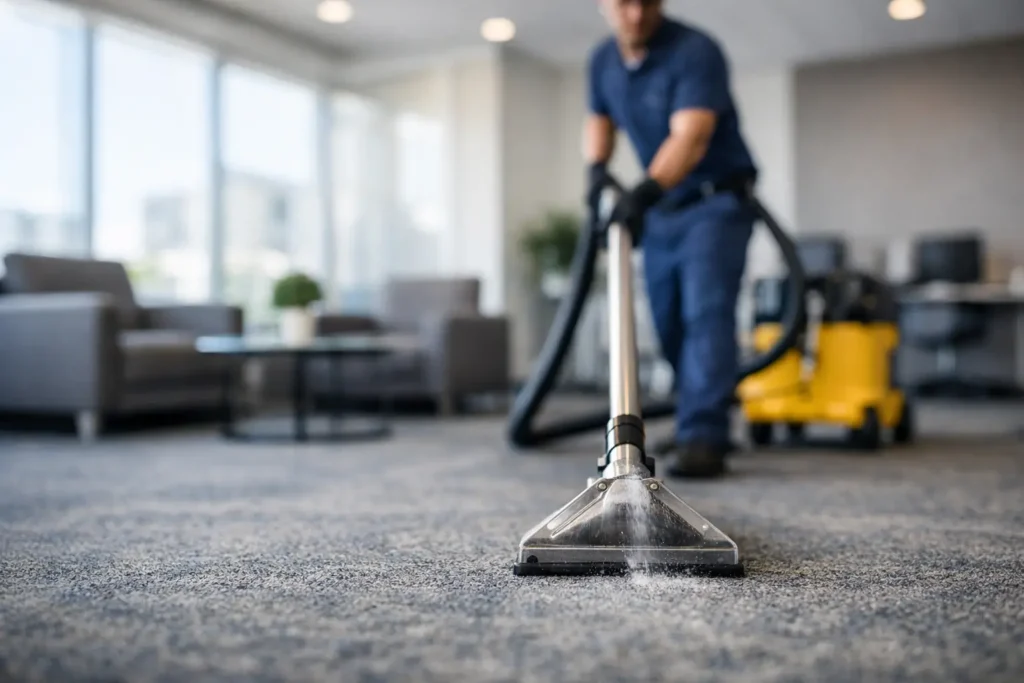
Some commercial sites benefit from low-moisture or dry cleaning methods because they allow carpets to be used sooner and reduce disruption. This can be ideal in offices, meeting rooms and active workplaces where long drying times are not practical. Other settings may require more restorative treatment, especially where heavy soiling, staining or neglected build-up is involved.
The right method depends on fibre type, carpet construction, soil level and operational needs. Going too aggressive can shorten carpet life. Going too light can leave embedded soil behind. A qualified cleaner should balance appearance, hygiene and drying time rather than applying the same process to every site.
The business case is bigger than appearance
Most operators first think about carpet maintenance in terms of presentation, and that is fair. Flooring covers a large visual area, so its condition affects how the whole premises feels. But there is a broader business case as well.
Regular carpet maintenance supports indoor cleanliness, helps reduce premature replacement and creates a better day-to-day environment for staff and visitors. In customer-facing spaces, it also strengthens trust. People may not comment on a clean carpet, but they notice when one looks neglected.
There is a staff benefit too. Clean, well-maintained interiors tend to feel more cared for. That matters in workplaces where comfort, professionalism and hygiene all contribute to how the space is experienced.
When to review your plan
A maintenance plan should not sit untouched for years. Businesses change. Headcount rises, layouts shift, weather patterns hit harder in some seasons and parts of the office may start receiving far more use than before.
If carpets are looking worn earlier than expected, if stains are reappearing, or if cleaning appointments keep feeling reactive, the plan probably needs adjusting. Often the answer is not a full overhaul. It may simply be a matter of increasing attention in key traffic zones, improving entry control or switching to a method that dries faster and suits the site better.
For Adelaide businesses, local conditions matter as well. Dust, rain, foot traffic and the nature of your premises all shape what practical maintenance looks like. A provider with experience in commercial interiors can help set a schedule that is realistic, transparent and tailored to how your site actually operates.
A commercial carpet maintenance plan works best when it feels like part of normal business care rather than an emergency fix. Done properly, it protects your flooring, supports a healthier indoor environment and keeps your workplace ready for the next person who walks through the door. If you want carpet to last and still look right along the way, consistency will always beat catch-up cleaning.